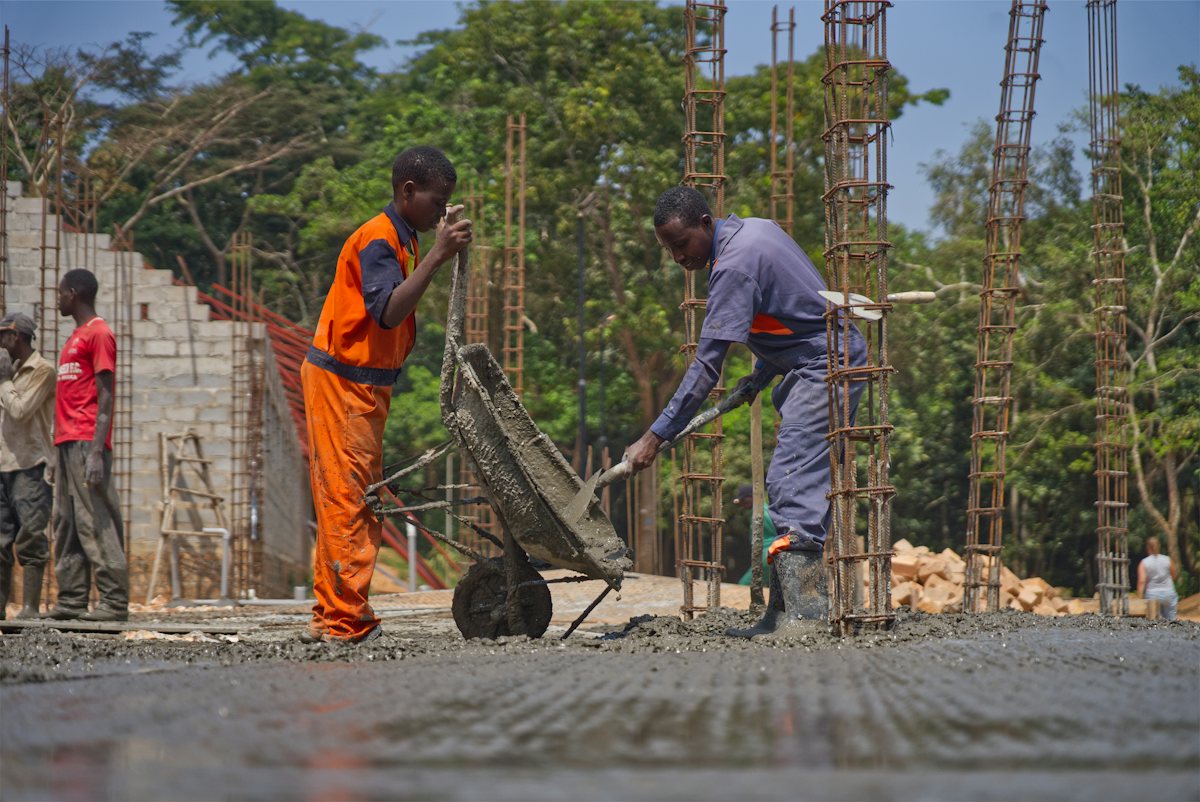
What does a concrete slab project involve?
Slab work in Bowling Green starts with knowing what will sit on it. A shed pad, a two-car garage, and a barn that holds a tractor all need different thickness and reinforcement.
- Layout. The slab is marked to the exact size of the building or pad, and it is checked for square.
- Excavation and grading. Topsoil and soft clay come out. The site is leveled, and any fill is compacted.
- Gravel base. Crushed stone is compacted to give even support.
- Vapor barrier. For garages and workshops, a plastic sheet under the slab helps keep ground moisture from coming up through the floor.
- Forms and reinforcement. Edges are formed, often with thicker edges where walls will sit, and rebar or mesh goes in.
- Pour and finish. Garage floors usually get a smooth trowel finish. Outdoor pads usually get a broom finish.
- Joints and curing. Control joints are cut, and the slab cures before building starts.
Before any digging, Kentucky 811 is called so buried lines get marked. Most contractors handle that call.
When do you need a concrete slab?
Common reasons people in Bowling Green call for slab work:
- A new shed, garage, or pole barn that needs a level floor
- An old garage floor that is cracked, sunk, or stained beyond cleaning
- A pad for an AC unit, generator, or trash cans that keeps sinking into the yard
- A gravel floor in a barn or carport that is muddy or hard to keep clean
- A spot for a boat, RV, or trailer that won't rut in wet weather
Why do concrete slabs crack and settle?
Slabs crack when the ground under them isn't ready for the weight. Clay soil around Bowling Green holds water and settles when it dries. Topsoil left under a slab rots and compresses. Fill dirt that isn't compacted keeps settling for years.
Parts of the Bowling Green area also sit on karst limestone, where heavy rain can weaken soil over underground drainage. That's one more reason a solid gravel base and good drainage around the slab matter. Water from roof edges that splashes along the side of a slab will slowly undercut it.
What affects the cost of a concrete slab?
- Size and thickness. Heavier loads need a thicker slab.
- Site prep, especially on sloped or soft ground
- Thickened edges or footings where walls will sit
- Vapor barrier and insulation for heated buildings
- Reinforcement, from mesh to heavier rebar
- Anchor bolts or embedded posts set for the building
- Access for the concrete truck or a pump
- Permits, since new buildings often need a building permit
Inside city limits, check with the City of Bowling Green Building Division at 270-393-3615 about permits for new garages, barns, and larger sheds. The city's permit page lists a no-fee permit for some small accessory structures and a building permit for larger ones.
Should you repair or replace a concrete slab?
Surface damage on a garage floor, like small cracks, pitting, or stains, can often be fixed with crack filling, grinding, or a coating. That's a good option when the floor is still level.
When a slab has sunk in one area, has wide cracks with one side lower, or has water coming up through it, the problem is underneath. Replacing the damaged section or the whole slab with proper prep is the fix that lasts. For smaller fixes, see concrete repair. If the slab is for a backyard seating area rather than a building, the concrete patios page covers that job.
Frequently asked questions
How thick should a shed or garage slab be?
Four inches is common for sheds and many garage floors. Slabs for heavy trucks, tractors, or lifts usually need more thickness and reinforcement. Tell the contractor what will be parked or stored on it.
How soon can I build on a new slab?
Framing can often start after a few days, once the slab is strong enough to walk and work on. Heavy equipment should wait longer. Concrete keeps gaining strength for about a month.
Do I need a vapor barrier under my garage slab?
For an enclosed garage, workshop, or anything you plan to heat or finish later, a vapor barrier is a good idea. For an open carport or an outdoor pad, it usually isn't needed.
Get a concrete estimate in Bowling Green
Call and describe the job, or send the form with a few details. Someone will set a time to look at the site and measure.