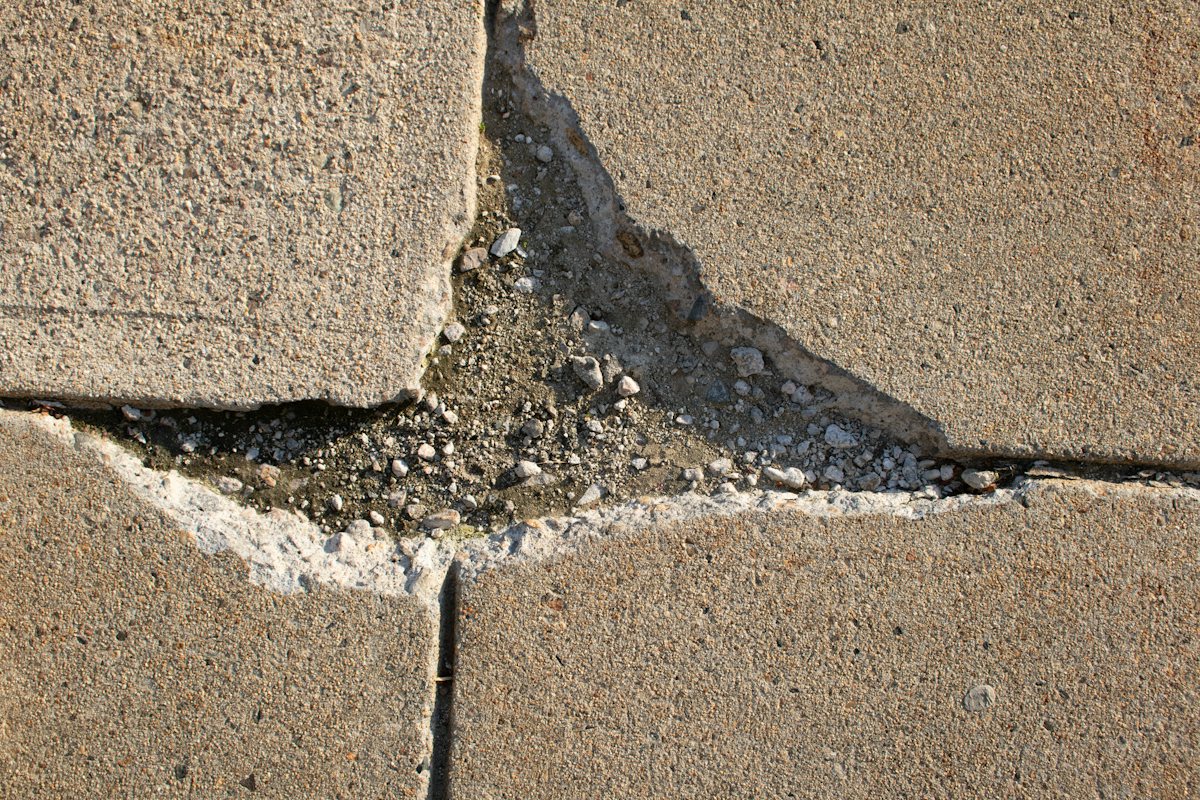
What kinds of concrete repair are there?
Concrete repair in Bowling Green usually falls into one of these types:
- Crack sealing. Flexible filler goes into cracks to keep water out. This is best for hairline and small cracks on slabs that are still level.
- Patching. Chipped edges, holes, and broken corners get filled with repair mortar.
- Resurfacing. A thin overlay goes over a worn or flaking surface to give it a new top layer.
- Section replacement. One broken or sunken slab is cut out at the joints and poured new, leaving the rest in place.
- Joint sealing. Gaps between slabs and along the house get sealed so water can't run under them.
- Sealing. A penetrating sealer helps protect sound concrete from water and road salt.
When does your concrete need repair work?
Call about a repair when you notice:
- New cracks, or cracks that get wider each season
- Flaking or pitting on the surface, often near the garage or street where salt collects
- A gap opening between your driveway or patio and the house
- One slab sitting lower than the one next to it
- Water pooling in the same low spot after every rain
Catching these early matters. A small crack that lets water in through one winter is often a bigger crack by spring.
Why does concrete get damaged in Bowling Green?
Most concrete damage in Bowling Green traces back to water and ground movement. The clay soil here swells when wet and shrinks when dry. Parts of the area sit on karst limestone, where heavy rain can soften the soil above underground drainage. In April 2025, WKU Public Radio reported that the city had responded to at least 18 new sinkholes after several days of heavy rain.
On the surface, freeze-thaw cycles and road salt cause most of the flaking. Water soaks into the top layer, freezes, and expands, which breaks off small pieces each winter.
What affects the cost of concrete repair?
- Type of repair, from simple crack sealing to full section replacement
- How much area is affected
- Access, especially for backyard patios
- Matching the look, since color and texture are hard to match on older concrete
- Cause of the damage, because fixing a drainage problem may be part of the job
A concrete repair estimate should explain what caused the damage. A repair that doesn't address the cause will usually fail again.
Should you repair or replace damaged concrete?
Repair is the right call when the slab is still level and solid. Hairline cracks, small chips, and light surface wear can be fixed for far less than new concrete, and the repair can last for years.
Replacement is the right call when the ground underneath has failed. If slabs have sunk, heaved, or broken into loose pieces, patching the top won't stop the movement. Replacing only the failed sections is often a middle ground. For full replacement, see concrete driveways and concrete patios.
Frequently asked questions
Will a crack repair be invisible?
Usually not completely. Filled cracks and patches are often a slightly different color from the old concrete. The goal is to keep water out and stop the damage from spreading.
Can sunken concrete be raised instead of replaced?
Sometimes. Slab lifting with foam or a cement grout can raise a sunken section if it is still in one piece. Broken slabs and slabs over failed soil usually need to be replaced instead.
How long does a concrete repair last?
Crack sealing on a stable slab can last several years and should be checked each spring. Repairs over ground that is still moving tend to fail within a season or two.
Should I seal my concrete after it's repaired?
Sealing helps keep water and salt out, which protects both the repair and the rest of the slab. Ask how long to wait before sealing, since fresh repair material needs time to cure.
Get a concrete estimate in Bowling Green
Call and describe the job, or send the form with a few details. Someone will set a time to look at the site and measure.