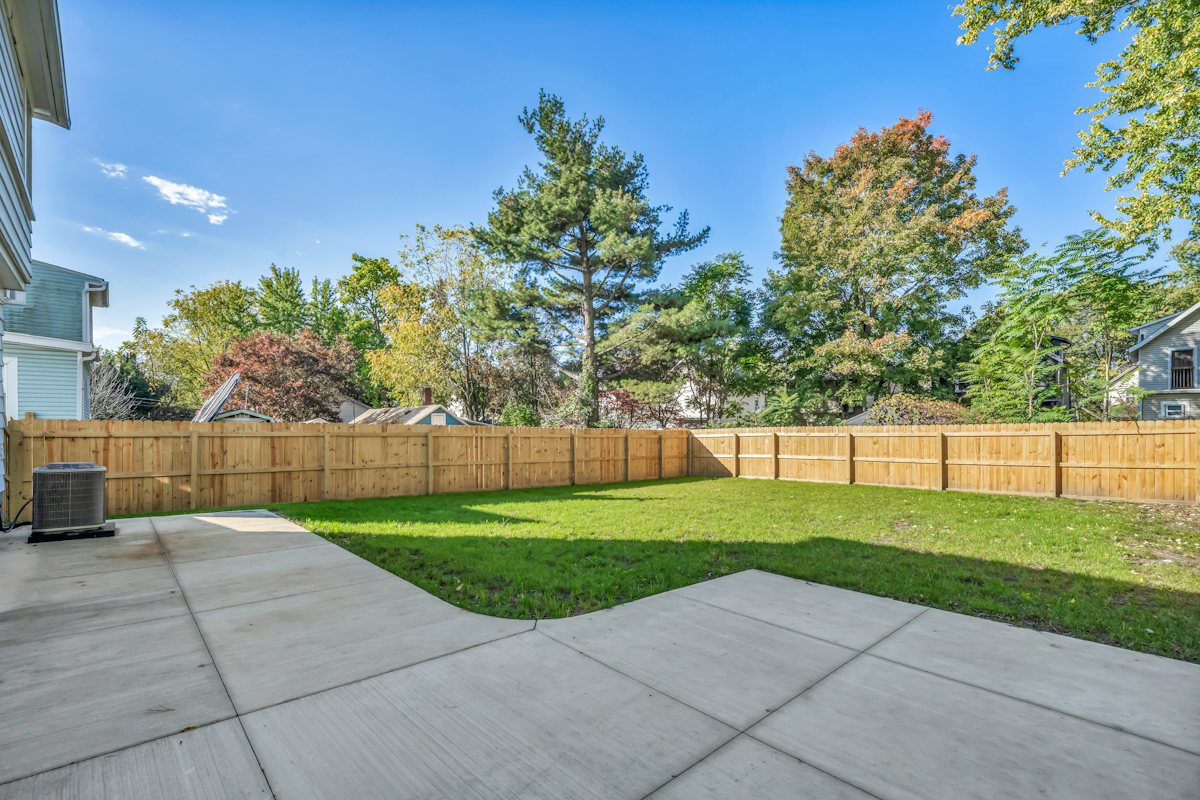
What does a concrete patio project involve?
Most backyard patios in Bowling Green are finished in one to three days.
- Planning the layout. Size, shape, and where it meets the house or back door. Stakes and string mark the outline.
- Digging and grading. Grass and soft soil come out, and the ground is sloped slightly away from the house.
- Gravel base. Crushed stone is compacted so the patio doesn't settle.
- Forms and reinforcement. Forms set the edges and curves, and wire mesh or rebar is added.
- Pour and finish. The surface gets a broom finish, a smooth trowel finish, or a decorative finish like stamped concrete.
- Joints and curing. Control joints are cut so shrinkage cracks stay in the grooves, and the slab cures for several days.
When is a new patio the right project?
People in Bowling Green usually call about a patio when:
- The backyard has no flat place to sit, grill, or set up a table
- An old patio has sunk next to the house and sends water toward the foundation
- Pavers have shifted and weeds are growing between them
- A small slab is too tight for the furniture or the people who use it
- A hot tub needs a level, solid pad that can carry its weight when full
Size is the most common regret. A good rule is to set out your table and chairs, then add room to walk all the way around them before you settle on a size.
Why do patios crack or sink?
Patios usually fail for the same reasons driveways do, just more slowly. Clay soil around Bowling Green holds water and settles when it dries, and a patio poured right on dirt will sink unevenly. Patios built against a house often sit on backfill from when the foundation was dug, which is loose and keeps settling for years unless it is dug out and compacted.
Water is the other cause. A patio that slopes toward the house, or a downspout that drains onto it, will wash out the base and can push water toward your foundation. Freeze-thaw cycles then open up any cracks that let water in.
What affects the cost of a concrete patio?
Patio prices in Bowling Green come down to a few things:
- Size and shape. Curves and odd angles take more forming than a simple rectangle.
- Access. If the truck can't reach the backyard, concrete may need to be pumped or wheeled in.
- Removal of an old patio, pavers, or a wood deck.
- Ground prep, especially on a slope or near fresh backfill.
- Finish. Broom finish is the most affordable. Color, exposed aggregate, and stamping cost more.
- Add-ons like steps down from a door, a seat wall border, or a walkway to the driveway.
Should you repair or replace an old patio?
If the patio is level and only has a few small cracks, sealing the cracks and cleaning or resurfacing the top can make it look much better for far less money.
If the patio has sunk toward the house, broken into separate pieces, or rocks when you step on it, replacing it is usually the better choice. Water running toward your foundation is a bigger problem than the patio itself, and fixing the slope means starting over with a new base.
Frequently asked questions
How big should my patio be?
For a table that seats four, plan on at least 12 by 12 feet. For a table plus a grill or a sitting area, many Bowling Green homeowners go 16 by 20 feet or larger. Mark it out in the yard first to get a feel for it.
Is concrete better than pavers for a patio?
Concrete costs less to install and has no joints for weeds to grow in. Pavers are easier to repair one piece at a time. Stamped concrete can give you the look of pavers with fewer weeds and less upkeep.
Can a concrete patio hold a hot tub?
Yes, if it is built for it. A hot tub full of water is very heavy, so the pad usually needs extra thickness and reinforcement. Tell the contractor about the hot tub before the patio is poured, not after.
How soon can I put furniture on a new patio?
Light furniture can usually go on after two or three days. Wait about a week for heavy items like grills or planters, and longer for a hot tub.
Get a concrete estimate in Bowling Green
Call and describe the job, or send the form with a few details. Someone will set a time to look at the site and measure.